
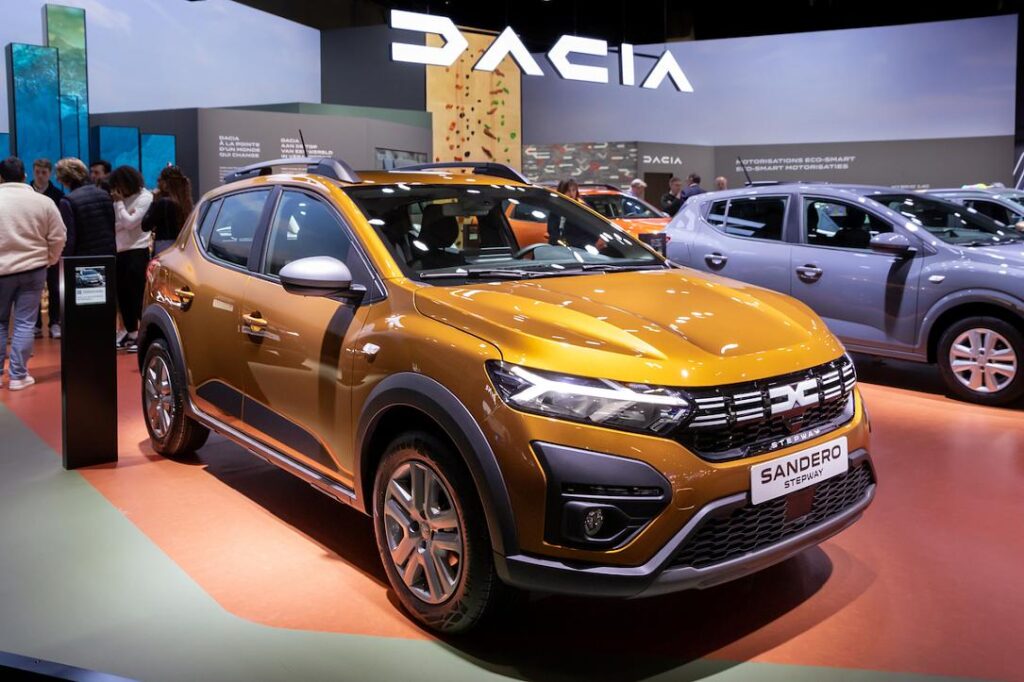
For the second consecutive year, a Dacia model has emerged as the best-selling car in Europe. Alongside the Dacia Sandero, other top-selling models include the Dacia Duster and the Ford Puma, all manufactured in Craiova.
Last year, over 500,000 vehicles were produced in Romania, generating more than €15 billion in revenue for the national economy—an amount nearly equivalent to Romania’s entire economic output in 1992. These figures clearly refute the notion that “nothing is produced in Romania” today. In fact, Romania’s industrial production has not only grown significantly but now exceeds even the levels of the communist era that some nostalgically recall.
Beyond automobiles, Romania ranks as the European Union’s largest natural gas producer, leading manufacturer of fiber optic cables, the second-largest producer of bicycles and honey, and a top exporter of wheat and barley, among other achievements.
Currently, Romania’s economy exceeds €350 billion, a dramatic increase from €35 billion in 2000. Analysts attribute much of this growth to Romania’s integration into the European Union.
However, the country continues to face significant challenges, including pronounced inequality, macroeconomic imbalances, poverty, and public services that lag behind the EU average. Both the achievements and challenges coexist within a Romania undergoing continuous transformation, reflecting broader global trends.
Experts stress that the European path remains the most viable route for ensuring long-term prosperity and development. A more integrated European Union, they argue, is essential, as no European nation can effectively operate alone in today’s geopolitical landscape.