
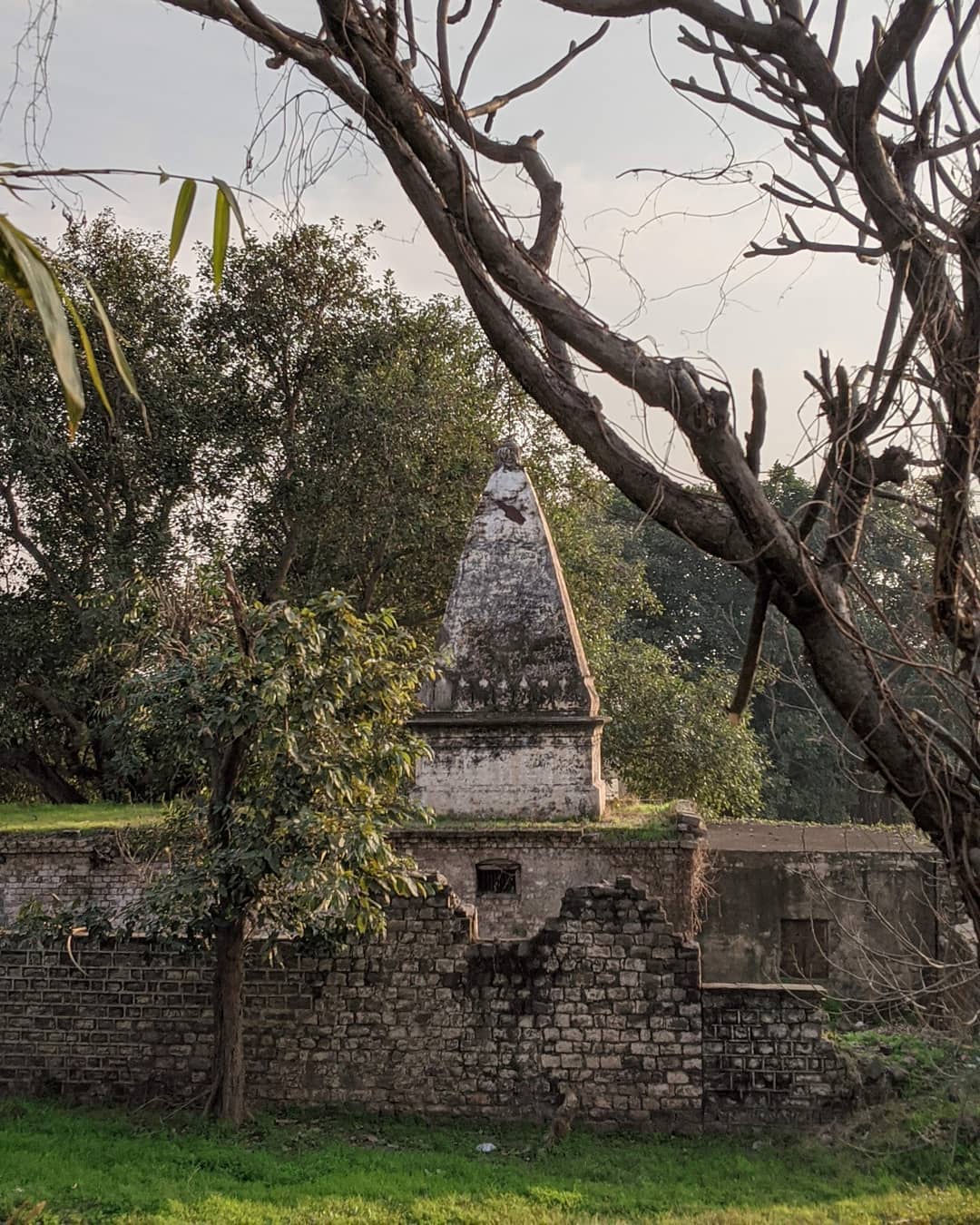
Rawal Dam Temple
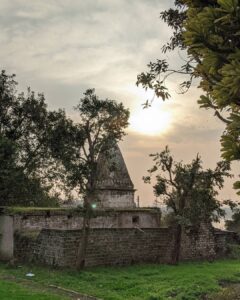
Rawal dam temple, historically referred to as a Shivala (a temple dedicated to Lord Shiva) is an ancient Hindu sanctuary located near the banks of Rawal Lake in Islamabad. When the Rawal dam was inaugurated in 1962, the rising waters completely engulfed Rawal village leaving this single elevated temple building on the periphery as the sole surviving structure of the old settlement. An ancient & multicultural settlement, Hindus predominately inhabited the Rawal village alongside a Muslim minority.
There were nearly a hundred households in the village, of which about 40 belonged to Muslims. At that time, Ishar Singh was the Numbardar (head) of the Rawal village. Some Muslim castes, namely Rajas, also known as Ghakkars or Kiyanis, Syeds, Bafanda, Thakyal Rajputs and Malhar lived in the village. The temple was constructed in 1883 during the British colonial period. Locally termed a Shivala, the compact, rectangular temple was primarily utilized by agrarian communities, local Hindu farmers traditionally built and frequented these small shrines to seek blessings before beginning their daily agricultural work.
The existing structure was not isolated; it was part of a broader religious network. Rawal Village hosted two other prominent temples: one with eight grand archways that was later damaged, and a larger ‘Gurukal’ or Krishnite temple that was entirely submerged under water when the dam was created. Before partition, a Samadhi (shrine) belonging to a Hindu ascetic of the Nath Jogi order was located near the present day Rawal Chowk.
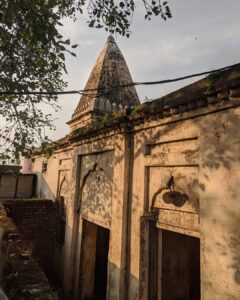
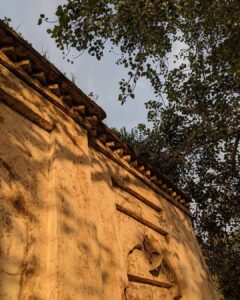
It was a small, domed structure where Hindu ascetics practised rituals. There are other sacred places of Nath jogis, probably used for meditation, in and around Islamabad. Among these, the sacred spaces at Bagh Joghian, which incidentally means ‘orchard of jogis’, are quite prominent. Another place associated with jogis is located just two kilometres west of Bari Imam, Jogis travelling to Taxila and other places stopped there. Hindu temples also existed in the villages of Chira, Kirpa and Mehran near Pind Beghal in Islamabad. The temple exhibits traditional regional craftsmanship, built utilizing local stone materials capable of withstanding the damp lakeside environment, temple although on its last legs, exudes presence, Rawal temple structure features a small, unlit garbhagriha (the innermost sanctum or womb-chamber) where deities were housed and only priests were permitted to enter. The main entryway features a series of classic cusped archways that open into a chamber used historically as a dharmshala, a rest house for pilgrims and traveling ascetics.
Today, it has been closed for over 60 years, the temple exists in a fragile and neglected condition, managed under the administrative control of the Evacuee Trust Property Board (ETPB). The temple is currently non-functional and has been closed for religious practices for decades. The outer boundary walls have collapsed, and the main structure is heavily dilapidated, showing significant signs of decay due to a lack of active conservation funding and maintenance.
Google Maps: M4VC+4Q5
Geographic Coordinates: 33° 41′ 34″ N, 73° 7′ 16″ E)