
” About Author ”
(Christopher J. writes about leadership, judgment, responsibility, and institutional trust. Drawing on a career in international affairs and public service, his essays explore how people and institutions make decisions under conditions of uncertainty, constraint, and consequence.)
The Value of Damaged Assets
Strategic institutions are usually judged by what they can still do. States often judge them by something else entirely. They ask what would be lost if they disappeared. Those are not the same calculation. Analysts naturally focus on capabilities. They count missiles, measure combat effectiveness, assess battlefield performance, and estimate the cost of recent losses. Governments ask thosen questions as well. They ask another one first. How much accumulated strategic capital would disappear if this institution ceased to exist? That question often leads to very different conclusions.
Over time, states accumulate far more than military capability. Weapons can be rebuilt. Institutions take decades. Relationships and trust often take longer still. That helps explain a recurring feature of international politics. States rarely abandon long-term strategic investments simply because they have been weakened. More often, they adapt around the damage rather than start over.
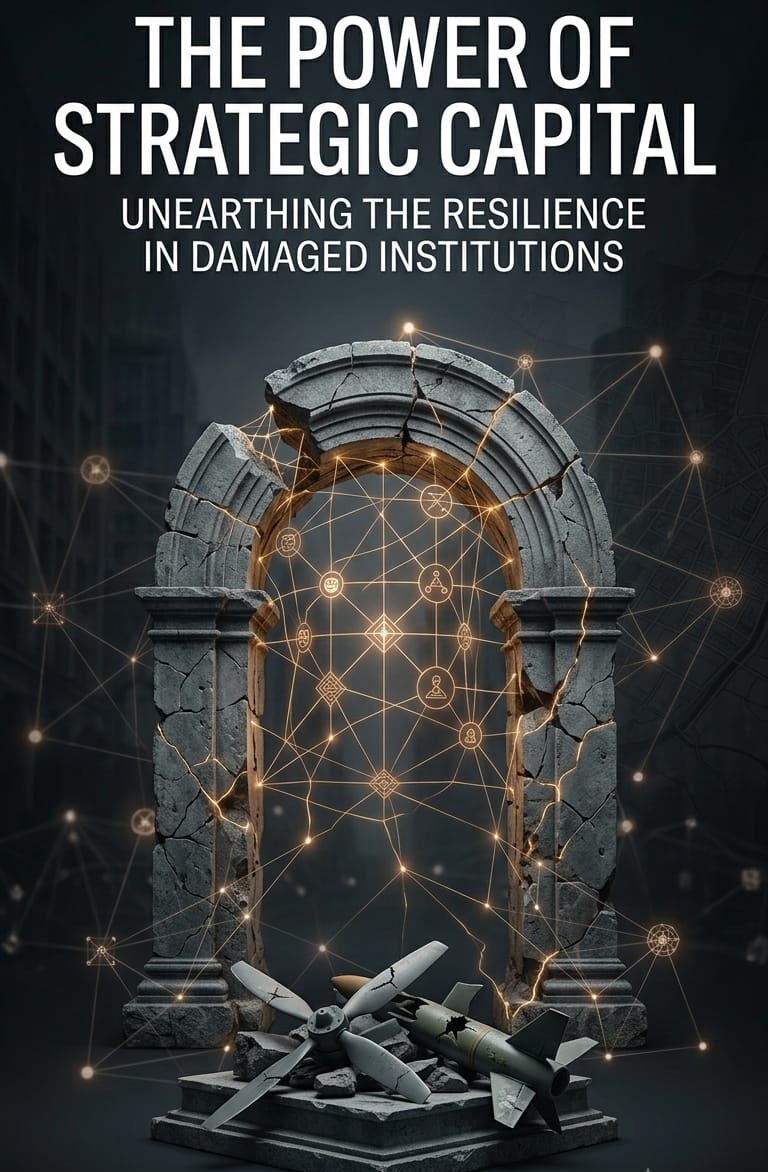
By accumulated strategic capital, I mean the relationships, institutional knowledge, political access, operational experience, and trust that states build over decades and cannot readily replace. Much of it cannot be measured on a battlefield, yet it often determines how effectively a state projects power beyond its borders.
Iran’s relationship with Hezbollah offers a useful illustration. There is little doubt that Hezbollah has emerged from the wars following October 2023 significantly weaker than before. Senior leaders have been killed. Military infrastructure has suffered extensive damage. Supply routes have become more uncertain, while years of Israeli intelligence penetration have exposed vulnerabilities that once appeared far less significant. Measured strictly in military terms, Hezbollah’s value to Iran has declined. Some observers therefore argue that the organization has shifted from one of Tehran’s greatest strategic assets to an increasingly costly obligation. That interpretation is persuasive as far as it goes. It overlooks what states are often trying to preserve.
Over four decades, Hezbollah became a strategic institution. It evolved beyond a military organization into an intelligence partner, political actor, logistics network, and enduring point of access into the Levant. Those relationships constitute the very strategic capital Iran has spent decades building. Weapons can be replaced. Forty years of relationships, access, and institutional experience cannot. That helps explain why Iran appears to be adapting its deterrence architecture rather than replacing it. Missiles, drones, cyber capabilities, and maritime coercion can compensate for lost military capacity. They cannot recreate four decades of political relationships, organizational experience, and regional access. The objective is not to preserve yesterday’s military balance. It is to preserve decades of accumulated strategic capital while the broader architecture evolves around it. This principle extends well beyond Iran.
Throughout history, states have preserved weakened alliances, intelligence services, overseas bases, and military organizations because replacing them would require rebuilding decades of accumulated investment. The longer an institution has been integrated into national strategy, the more difficult it becomes to replace. What appears to outsiders as an expensive burden may instead represent decades of strategic capital that cannot simply be recreated elsewhere.
Military capability matters. But it is not the only measure of strategic value. Military capability is the easiest part of strategy to measure. Strategic capital is often the hardest to measure. States understand the difference because they think less about what a strategic institution can still do than about what would disappear if it no longer existed. Those are rarely the same calculation.
Sometimes the most valuable strategic assets are no longer the strongest. They are the ones that have become irreplaceable.