
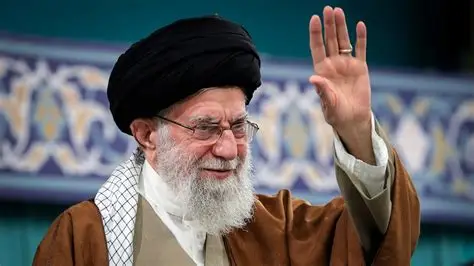
Ayatollah Ali Khamenei:The Man Who Ruled Iran for Three Decades, A Life Shaped by Revolution.
Ali Khamenei was born in 1939 in Mashhad, Iran, into a religious family. His father was a cleric, and from a young age, Khamenei followed the same path — studying in the seminaries of Qom under some of the most respected scholars of Shia Islam. But he wasn’t just a quiet student of religion. He became deeply involved in the movement against the Shah of Iran, the country’s monarch at the time, and was arrested and jailed several times for his activism during the 1960s and 70s.
When the Islamic Revolution succeeded in 1979 and Ayatollah Khomeini became Iran’s first Supreme Leader, Khamenei rose quickly through the new system. He served as President of Iran from 1981 to 1989 — a period that included the brutal Iran-Iraq war. When Khomeini died in 1989, Khamenei was chosen as his successor, becoming the second Supreme Leader of the Islamic Republic. He would go on to hold that position for 35 years, longer than almost any modern head of state anywhere in the world.
His Work and Legacy
As Supreme Leader, Khamenei held the most powerful position in Iran’s political system — above the president, above parliament. He controlled the armed forces, the judiciary’s top appointments, and had final say on major decisions of state, foreign policy, and nuclear matters.
His supporters see him as a steady hand who protected Iran’s sovereignty against Western pressure, built up the country’s regional influence, and stayed true to the ideals of the 1979 revolution. He was a central figure in shaping Iran’s nuclear programme and its network of allied groups across the Middle East.
His critics, both inside and outside Iran, point to a very different picture — a leader under whom dissent was crushed, press freedom was tightly restricted, and economic hardship deepened for ordinary Iranians due to sanctions and mismanagement. Human rights groups have documented thousands of deaths during crackdowns on protests, including the nationwide unrest that broke out in December 2025, only months before his death.
Both of these views exist side by side, and any honest account of his life has to hold them together rather than pick just one.
How He Died
On February 28, 2026, the United States and Israel launched joint airstrikes on Tehran, targeting Khamenei’s office compound as war broke out between Iran and Israel. He was killed in the strike, along with four members of his family. He was 86 years old.
Iranian state media described him as having been “martyred” — a term used in Iran to honor him as someone who died for the cause of the Islamic Republic and, in the religious framing many Iranians hold, in the tradition of Imam Hussein’s sacrifice. Internationally, especially in Western and Israeli reporting, the event is described more plainly as a targeted killing carried out during the war.
His funeral stretched across several days and cities in July 2026, drawing enormous crowds of mourners in Tehran before his burial at the Shrine of Imam Reza in his native Mashhad — Shia Islam’s holiest site in Iran. Many in the crowds wept openly and chanted against the United States, while beyond the cameras, some Iranians who had lost family in the earlier crackdowns said his death brought them little comfort.
Closing Thought
Khamenei’s story is really the story of modern Iran itself — shaped by revolution, war, faith, and deep division. However history eventually judges him, his death marks the end of an era that defined the Islamic Republic for over three decades.
139