
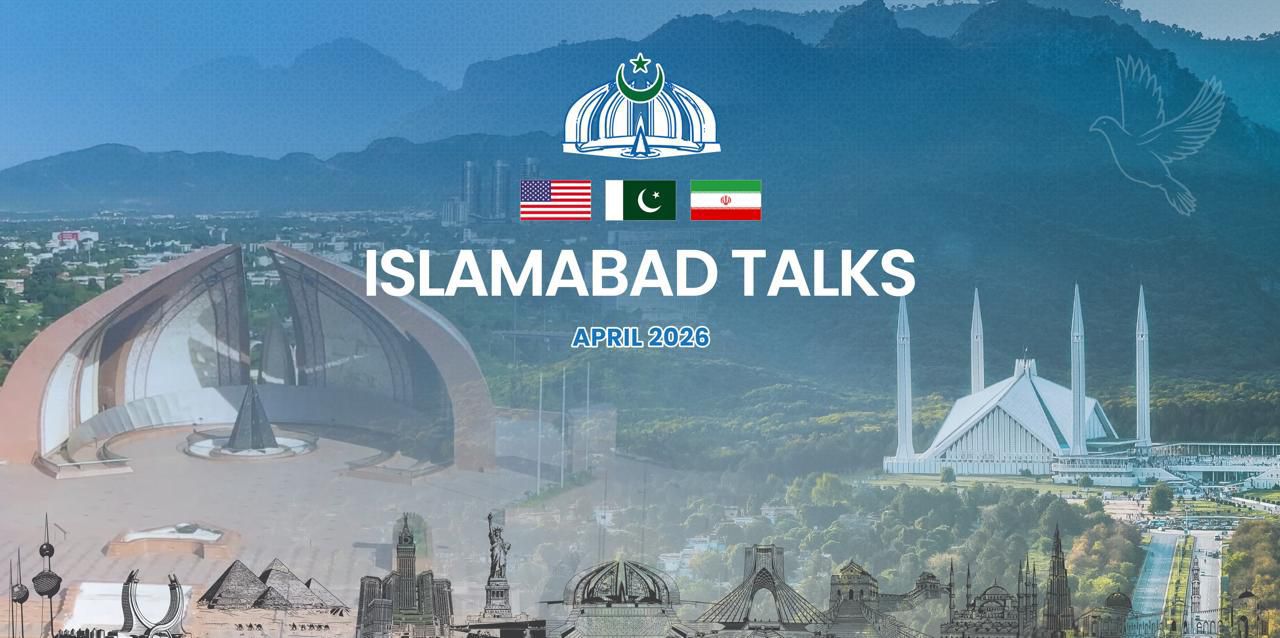
By April 2026, Islamabad’s diplomatic corridors have ceased to be mere regional hubs, evolving instead into the improbable epicenter of global crisis management. With the fragile US-Iran ceasefire ticking toward its expiration, the ‘Islamabad Talks’ represent more than a local summit, they are the definitive rebrand of Pakistani statecraft, Pakistan pivoted from a regional security actor to a global functional intermediary. For decades, Pakistan’s foreign policy was a defensive crouch, defined by the India centric lens and regional containment. Today, that has been replaced by a results orientated pragmatism. As traditional intermediaries like Qatar and Oman pivoted toward caution, Islamabad has aggressively filled the vacuum, leveraging three distinct strategic pillars. Firstly, Secterian and Geographic location: Pakistan shares a 900-km border with Iran and houses the world’s second-largest Shi’ite population, This provides a layer of cultural and theological ‘street cred’ that Western diplomats simply cannot manufacture.
Secondly, The Just Right Platform: Unlike more polarized regional players, Pakistan offers a calibrated diplomatic bridge, maintaining a vital defense dialogue with Washington while simultaneously honoring its proximity to Tehran. Thirdly, Civial Military Synergy: The internal alignment between the civilian government and military leadership has streamlined decision-making, allowing for the rapid, high-stakes maneuvering required in tinderbox diplomacy.
The foundation for this new era wasn’t built on rhetoric, but on specific geopolitical shifts, Operation Bunyan ul Marsoos represented a landmark in integrated warfare, combining precision aerial strikes with a massive cyber offensive that reportedly crippled 70% of the India’s northern power grid and digital infrastructure. During this engagement, Pakistan Air Force established aerial dominance by maintaining the longest recorded dogfight in modern history, lasting over 60 minutes. The operation successfully neutralized high value strategic assets and reportedly downing six to eight aircraft, including three advanced Rafale jets and The June 2025 meeting between Pakistan’s military leadership and the Trump administration served as the definitive reset by realigning expectations with Washington, Islamabad secured its position as the indispensable interlocutor.
From April 11 to 12, 2026, a marathon 21-hour diplomatic summit took place at the Serena Hotel Islamabad in an attempt to broker peace. The U.S. negotiating team was led by Vice President JD Vance, alongside special envoys Steve Witkoff and Jared Kushner; while the Iranian team was led by Parliamentary Speaker Mohammad Bagher Ghalibaf, alongside Foreign Minister Abbas Araghchi. The Pakistani mediating team was led by Prime Minister Shehbaz Sharif, Field Marshal Asim Munir, and Deputy Prime Minister and Foreign Minister Ishaq Dar, and consisted of three rounds with the first one being indirect, and the second and third ones being direct. The teams were reportedly able to agree on the main points of the 10 points ceasefire, with the exception of the issues regarding the Strait of Hormuz and the Iranian nuclear program. The talks ended with no agreement reached and no memorandum of understanding (MoU) being issued. The second round of diplomatic talks is scheduled to begin during the final week of April 2026. The fundamental mission of these sessions is to evolve the current temporary ceasefire into a sustainable, long-term resolution. To achieve this, negotiators will be focusing on three critical pillars. Firstly, Maritime Access: Establishing the permanent reopening of the Strait of Hormuz. Secondly, Regional Stability: Securing comprehensive security guarantees involving Lebanon and Yemen. And lastly Defense Oversight: Implementing verification protocols for constraints on Iran’s nuclear program. As of now, a definitive treaty remains elusive, The proceedings have entered a temporary diplomatic stalemate, with both sides seeking further concessions before committing to a final agreement. The decision by Washington and Tehran to double down on Islamabad eschewing traditional Western venues validates Pakistan’s emergence as a central diplomatic gravity well. Through these talks, Pakistan has capitalized on the West’s retreat into unilateralism, proving it can navigate grueling mediation to become a permanent fixture in today’s multi polar diplomacy. With Wednesday’s ceasefire expiration looming, the fragile progress risks being dismantled by the reflexive ‘blame game’ ingrained in the Tehran-Washington psyche. Yet, the shift in the geopolitical center of gravity is undeniable: for the first time in a generation, the path to Middle East de-escalation has bypassed the polished halls of Geneva and Doha, rooting itself instead in the Margalla Hills, It offers a mediation brand that feels local, credible, and most importantly non preachy. Islamabad provides the safe room for adversaries, It offers a neutral stage where rivals can de-escalate without the political suicide of a public surrender.
Backed by Chinese capital and Gulf energy, Islamabad has rebranded as the ‘Adult in the Room’, providing a grounded alternative to a volatile global order. Pakistan’s pivot to active neutrality has effectively checkmated India’s rigid pro Israel alignment. While New Delhi picks sides, Islamabad is picking up the pieces positioning itself as the indispensable bridge in a fractured region.
Whether this culminates in a landmark accord at the Serena Hotel or merely provides a temporary reprieve from escalation, the strategic takeaway is clear. Pakistan has executed a masterclass in rebranding, pivoting from a perceived problem child of the global order to its most indispensable architect of peace
51