
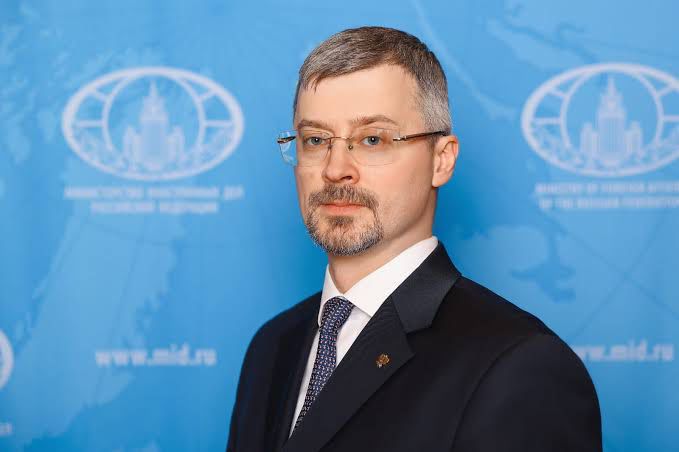
On March 17, 2026, Ambassador Albert P. Khorev held a briefing for Pakistani journalists about the situation in and around Ukraine.
He presented Russia’s position on the conflict, describing it as a broader confrontation with the collective West. He stated that the situation on the front line currently favors Russian forces while drawing attention to intensified Ukrainian strikes on Russian territory and civilian infrastructure.
He noted that diplomatic contacts continue and that several rounds of talks have been held in 2026, resulting in some humanitarian progress, including prisoner exchanges. The Ambassador emphasized that Russia is open to a negotiated settlement, but insists that any agreement must address the root causes of the conflict, including NATO’s eastward expansion and Kiev’s discrimination against the Russian-speaking population.
Regarding humanitarian issues, Ambassador Khorev provided detailed information on the situation of children affected by the conflict. He rejected Western claims that thousands of Ukrainian children had been forcibly transferred to Russia, stating that the widely cited figures from international organizations parrot Ukrainian propaganda and do not correspond to reality.
The Ambassador stressed that during the direct Russia-Ukraine talks in 2025, the Ukrainian delegation provided a list of only 339 children who had lost contact with their families. He noted that Russia has been working to reunite these children with their relatives and that, as of early March 2026, thirteen children had been safely repatriated to Ukraine. He added that the process is mutual, with children also being returned from Ukraine to Russia.
In response to media inquiries regarding the situation in Iran, the Ambassador condemned the escalation in the Middle East following U.S. and Israeli aggression against Iran. He emphasized that the International Atomic Energy Agency found no evidence that Iran is building a nuclear bomb — a pretext the aggressors used to justify their invasion.
The Ambassador strongly condemned the assassination of Iran’s Supreme Leader, Ayatollah Ali Khamenei, as well as attacks on civilian targets, including a strike on a school in Minab. According to the Ambassador, such actions constitute serious violations of international law and risk further destabilizing the region.
In conclusion, the Russian Ambassador called for restraint and emphasized the need for political and diplomatic solutions to the crisis surrounding Iran. He stressed that long-term stability must be based on dialogue, respect for sovereignty, and consideration of the security interests of all Gulf states and neighboring countries.