
The system’s spoiled brat
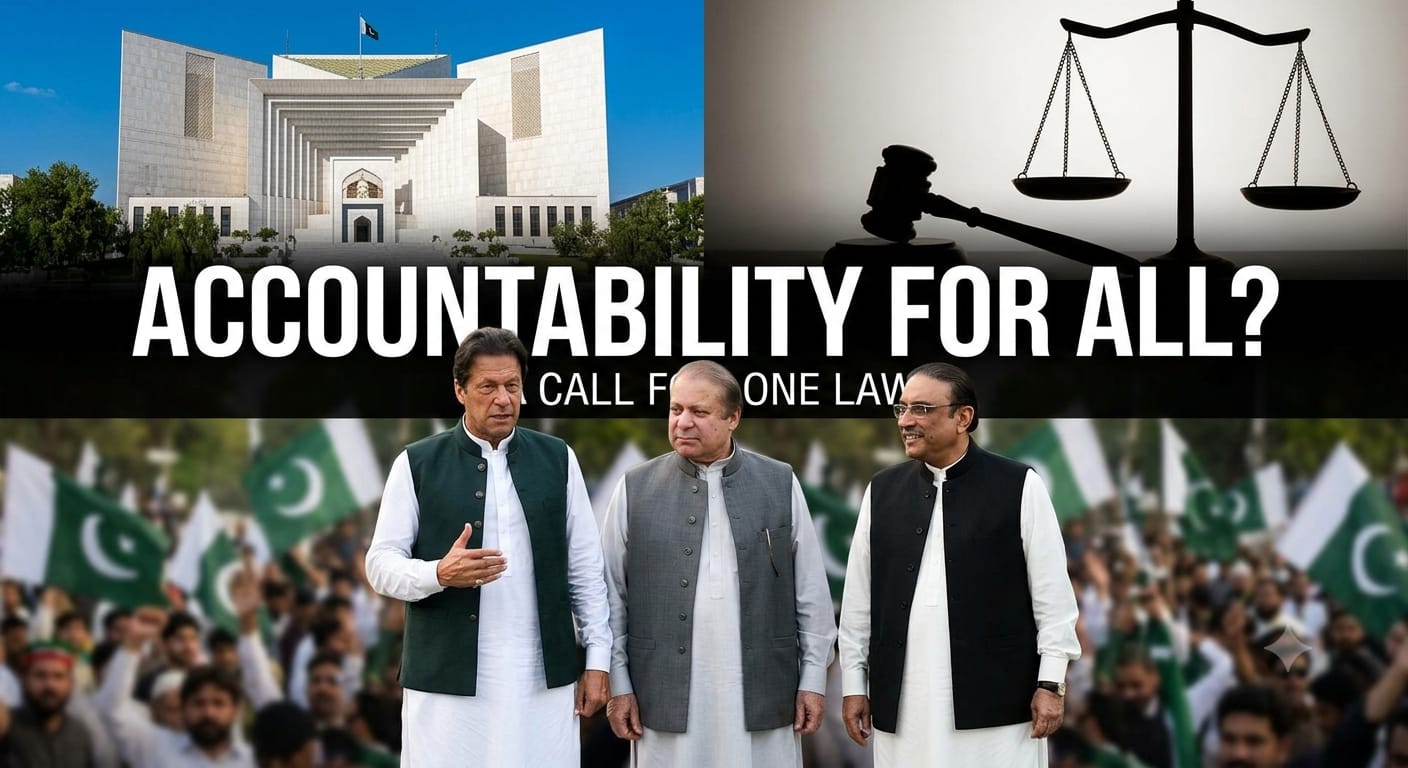
Pakistan’s politics repeatedly raises one fundamental question regarding Imran Khan: if there are such serious cases and allegations against him, then why does the law not appear to be applied equally to everyone? If a crime has been proven, why is there no complete and clear implementation of the sentence? And if it has not been proven, why are political statements portraying him as a criminal?
The cases against Imran Khan, including the Toshakhana and Al-Qadir Trust cases, have raised serious questions about his political credibility. The court decisions and legal proceedings are important in their own right, but the public has a legitimate right to know what happened to state resources, public office, and the trust placed in those who held power. Being a former prime minister should not give anyone immunity from accountability.
If a court has established guilt in a particular case, then it is entirely legitimate to ask why a political figure should receive extraordinary relief when it comes to punishment. An ordinary citizen is expected to obey the law fully, so a former prime minister should be held to the same standard. Position, fame, and political popularity should never be greater than the law.
The events of May 9 also raised extremely serious questions about Imran Khan’s politics. The attacks, vandalism, and violence involving sensitive and military installations were grave incidents. Whoever is legally proven to have played a role should be held accountable without discrimination. It is legitimate to question Imran Khan’s political role and possible responsibility, but responsibility for specific crimes must also be established through evidence in court.
The real issue is not only Imran Khan but Pakistan’s entire accountability system. People also ask why other major political leaders, including Nawaz Sharif and Asif Ali Zardari, faced severe legal action in the past, and whether the same standard still exists for everyone today. If one politician can be punished under the law, another should not receive special treatment simply because of political influence or popularity.
The political criticism that “if Nawaz Sharif and Zardari were given severe treatment, why is Imran Khan being treated like a favorite?” is understandable. But the principled answer is that no one should face either unlawful harshness or unlawful leniency. Nawaz Sharif, Zardari, or Imran Khan—there should be one law and one standard for everyone. If someone was treated unjustly in the past, repeating that injustice against someone else is not a solution.
One of the most dangerous problems is that accountability in Pakistan often becomes another name for political rivalry. When one party is in power, cases against its opponents are called accountability; when that same party moves into opposition, those cases are called political victimization. This approach weakens public trust in state institutions.
Imran Khan’s supporters must also accept that popularity does not place anyone above accountability. If he is proven guilty of wrongdoing involving financial matters or the events of May 9, he should be held accountable according to law. At the same time, his opponents must understand that calling someone a “thief” simply because of political hatred is not a substitute for a court of law. The responsibility to prove a crime lies with the state and the prosecution.
The real point of strong criticism should be that the double standard must end in Pakistan. If the law can be applied to Nawaz Sharif, and if cases can be pursued against Zardari, then the same legal standard should apply to Imran Khan. But likewise, if a court grants someone relief, that relief should be examined according to law rather than simply through political anger.
The public does not need a “favorite”; the public needs justice. If Imran Khan is proven guilty of a crime, his political popularity, former position as prime minister, or public support should not become a shield for him. And if he is legally acquitted of an allegation, the state must respect that decision.
Pakistan will only move forward when accountability is based on principles rather than personalities. There should be no special treatment for Imran Khan, no special treatment for Nawaz Sharif, no special treatment for Zardari, and no special treatment for any other powerful politician.
The real question is not simply whether Imran Khan should receive a “harsh punishment.” The real question is whether the law is truly equal for everyone. If a crime is proven, there should be punishment; if it is not proven, the allegation should end. But no one should be treated as a favorite because of political power, and no one should be declared a criminal merely because of political hostility. That is what genuine accountability and justice should mean.