
After a nine-hour flight and a six-hour layover at Hamad International Airport, Switzerland arrived first as an image of clean skies, precise movement and the quiet efficiency for which the country is known. But the reason for the visit returned almost immediately, not through a briefing note or a television rundown, but through a phone notification and then a brief exchange at immigration.
With my Pakistani passport in hand, I approached the counter at Zurich Airport. The immigration officer, Manuel, looked up and said, “Your prime minister is also coming, right? You are peacemakers.”
It was a small moment, but it carried the weight of the trip. Within minutes, the exhaustion of travel had lifted. Switzerland was not simply a destination. It was becoming the setting for a diplomatic moment in which Pakistan’s role would be observed directly, closely and in real time.
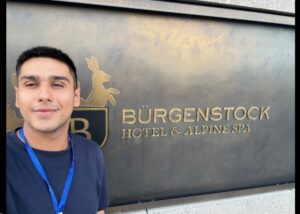
Outside the airport, officials from Pakistan’s mission in Switzerland were waiting to receive the media delegation. We were among the first from the Pakistani media group to arrive in Zurich before moving toward Bürgenstock, the resort above Lake Lucerne long associated with discretion, security and high-level diplomacy.
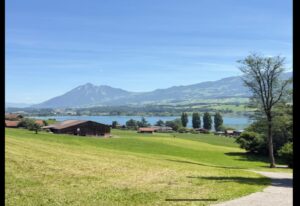
The drive through Lucerne toward Bürgenstock raised a familiar question, why does Switzerland so often become the place where adversaries come to talk?
The answer lies less in scenery than in history. When confrontation becomes too costly and public diplomacy becomes too exposed, states often look for a venue that carries fewer political burdens. Switzerland has spent more than two centuries building that asset, trust.
Swiss neutrality was internationally recognised by the major European powers in 1815. Since then, the country has developed what it calls its “good offices,” a diplomatic tradition that includes hosting negotiations, facilitating dialogue, mediation and protecting power mandates when states have broken off relations. Switzerland’s role rests on independence, impartiality and the ability to create space where others are blocked.
That reputation has repeatedly been tested. Lausanne gave international recognition to modern Türkiye through the 1923 treaty. Geneva hosted the 1954 agreements on Indochina. The 1988 Geneva Accords helped set the course for the Soviet withdrawal from Afghanistan. And the 1949 Geneva Conventions remain central to modern international humanitarian law.
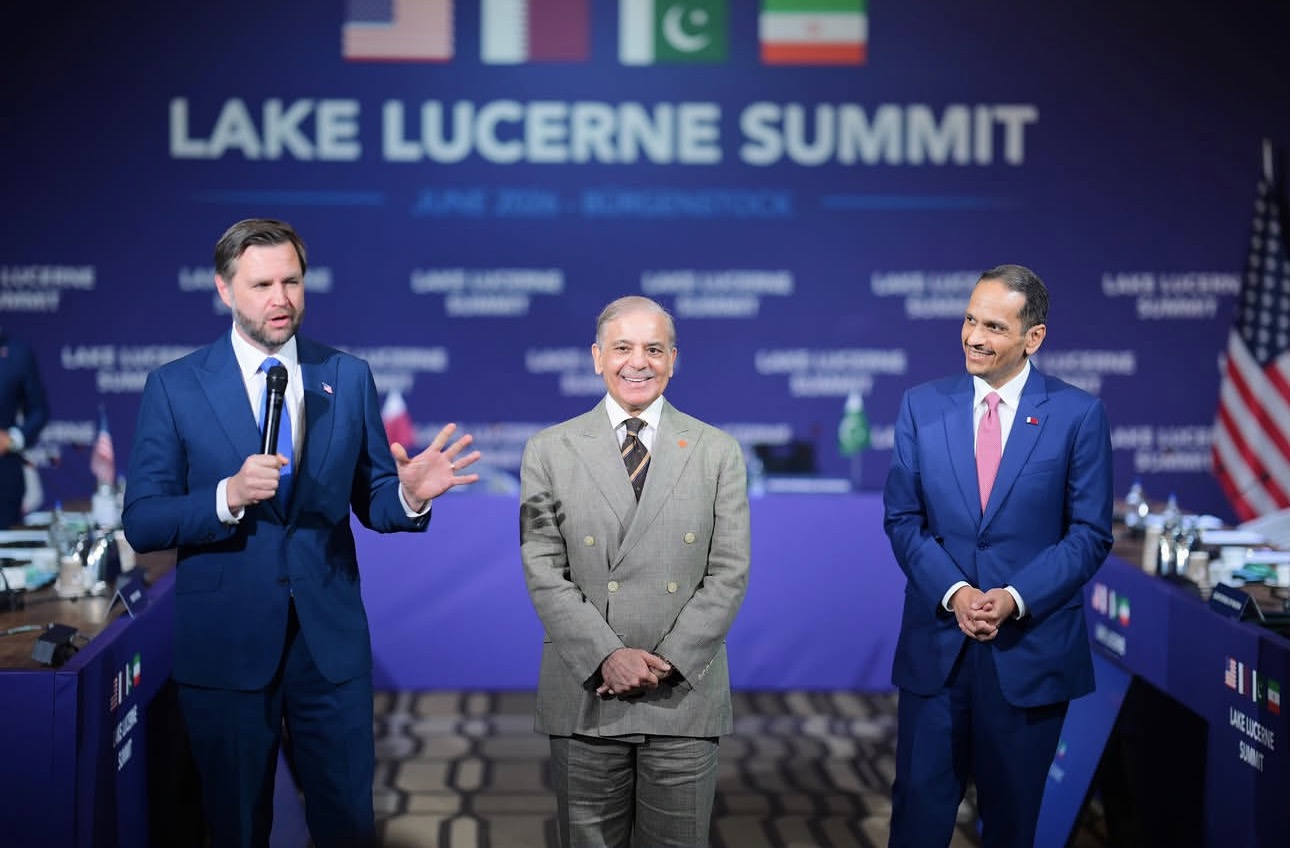
Bürgenstock entered that tradition again in June 2026. According to Pakistan’s Foreign Office, Prime Minister Shehbaz Sharif, accompanied by Chief of Army Staff and Chief of Defence Forces Field Marshal Syed Asim Munir, travelled to Switzerland for high-level talks on the implementation of the Islamabad Memorandum of Understanding. The Foreign Office said the engagement marked the first formal follow-up after the MoU was signed on June 17, with high-level delegations from Iran, Qatar and the United States involved in the process.
Pakistan’s role was facilitative and political. Switzerland’s role was different, but no less important. It provided the room, secure, neutral and removed from the symbolism that can often complicate diplomacy before negotiations even begin.
That role was especially significant in the case of Washington and Tehran. Since May 21, 1980, Switzerland has represented American interests in Iran as the protecting power of the United States, a function it performs through its embassy in Tehran in the absence of formal U.S.-Iran diplomatic relations.
For me, the 36 hours in Switzerland were not only about covering a diplomatic event. They were about witnessing how Pakistan was being discussed in international corridors at a time of renewed regional attention. One moment captured that shift sharply, Pakistan TV head Adil Shahzeb asked U.S. Vice President JD Vance about Pakistan’s role in mediation. His reply, “Very good, we love Pakistan,” quickly travelled across digital platforms as well as mainstream media, and became a shorthand for the warmth surrounding the moment.

But beyond the sound bite, the larger story is the renewed momentum in U.S.-Pakistan relations.
In recent weeks, officials on both sides have placed emphasis on security cooperation, economic engagement and regional diplomacy. Natalie A. Baker, the U.S. chargé d’affaires in Islamabad, has become one of the most visible American figures in that engagement. Her meetings with senior Pakistani officials, including Deputy Prime Minister and Foreign Minister Ishaq Dar and Interior Minister Mohsin Naqvi, have focused on regional developments, bilateral priorities and Pakistan’s role in reducing tensions.
The timing is notable. In 2026, the United States is marking 250 years since the adoption of the Declaration of Independence in 1776. In Islamabad, the U.S. Mission has framed the anniversary alongside what it describes as a transformed partnership with Pakistan, with Baker publicly highlighting areas of cooperation including economic opportunity, education, culture and people-to-people ties.
For Pakistan, the renewed engagement comes at a moment when its geography, security relationships and diplomatic access have again placed it at the centre of regional calculations. For Washington, Pakistan remains a consequential partner in a region where crises rarely remain contained within borders.
The 36 hours in Switzerland ended where they began, with the green passport, the memory of an immigration officer’s remark, and the recognition that diplomacy is often measured not only by signed documents, but by who is trusted enough to help bring adversaries into the same room.
In Bürgenstock, Pakistan was not a spectator to diplomacy. It was part of the architecture that made dialogue possible.