
The End of Easy Trade: Why Canada Had to Walk Away From Trump’s Latest Demands
By: Muhammad Mateen Khan (MK)
If anyone still held onto the hope that Canada and the U.S. would always figure out their trade problems behind closed doors, this weekend put that idea to rest.
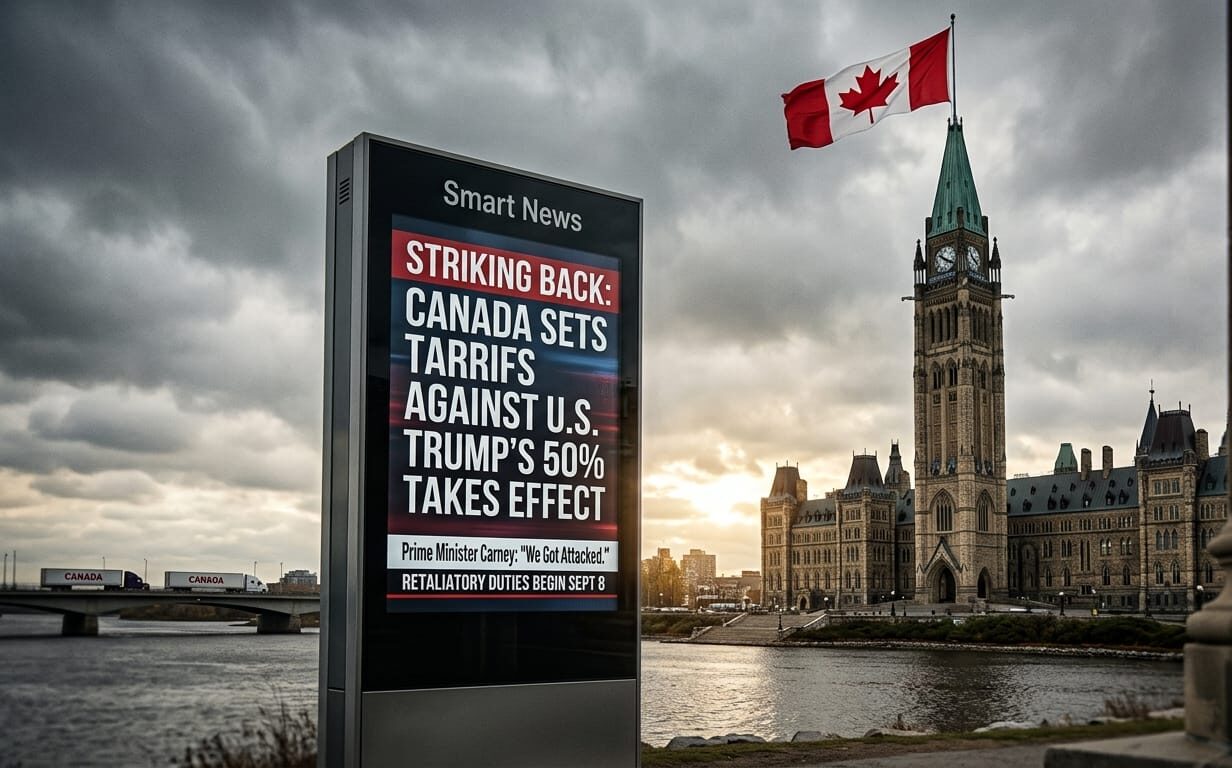
When the White House hit roughly $20 billion worth of Canadian goods with a massive 50 percent tariff, Prime Minister Mark Carney didn’t bend. Instead, he walked away from the negotiating table and made it clear that Canada is hitting back with dollar-for-dollar retaliatory tariffs on September 8. His message was simple: when you get attacked, you’re in a fight—and Canada isn’t going to just take the hit.
For years, the strategy in Ottawa was to play nice, negotiate, and rely on shared economic ties to smooth over rough patches with Washington. But that approach ran out of runway. In the final hours of talks, U.S. negotiators pushed demands that went way too far. They tried to tell Canada what kind of trade deals it could make with other countries, placed harsh terms on Canadian-made trucks, and targeted Canadian cultural policies. As Carney put it, the U.S. simply asked for too much and offered too little. Accepting those terms would have meant handing over economic control to avoid temporary pain.
Make no mistake, fighting back will hurt. Neary 70 percent of Canadian exports go straight to the American market. Canadian businesses—from steel mills and dairy farms to manufacturers—are bracing for impact, and prices will inevitably rise for regular consumers on both sides of the border.
Yet, capitulating would have set a far worse precedent. It would have told Washington that threatening Canadian jobs with sudden tariffs is an easy way to extract political concessions. By standing firm and rolling out emergency support for affected industries, Canada is choosing to absorb a short-term hit to protect its independence over the long haul.
The reality is that North American trade has changed for good. The days of taking free, predictable cross-border business for granted are over, and both countries are going to have to adapt to a much bumpier road ahead.