
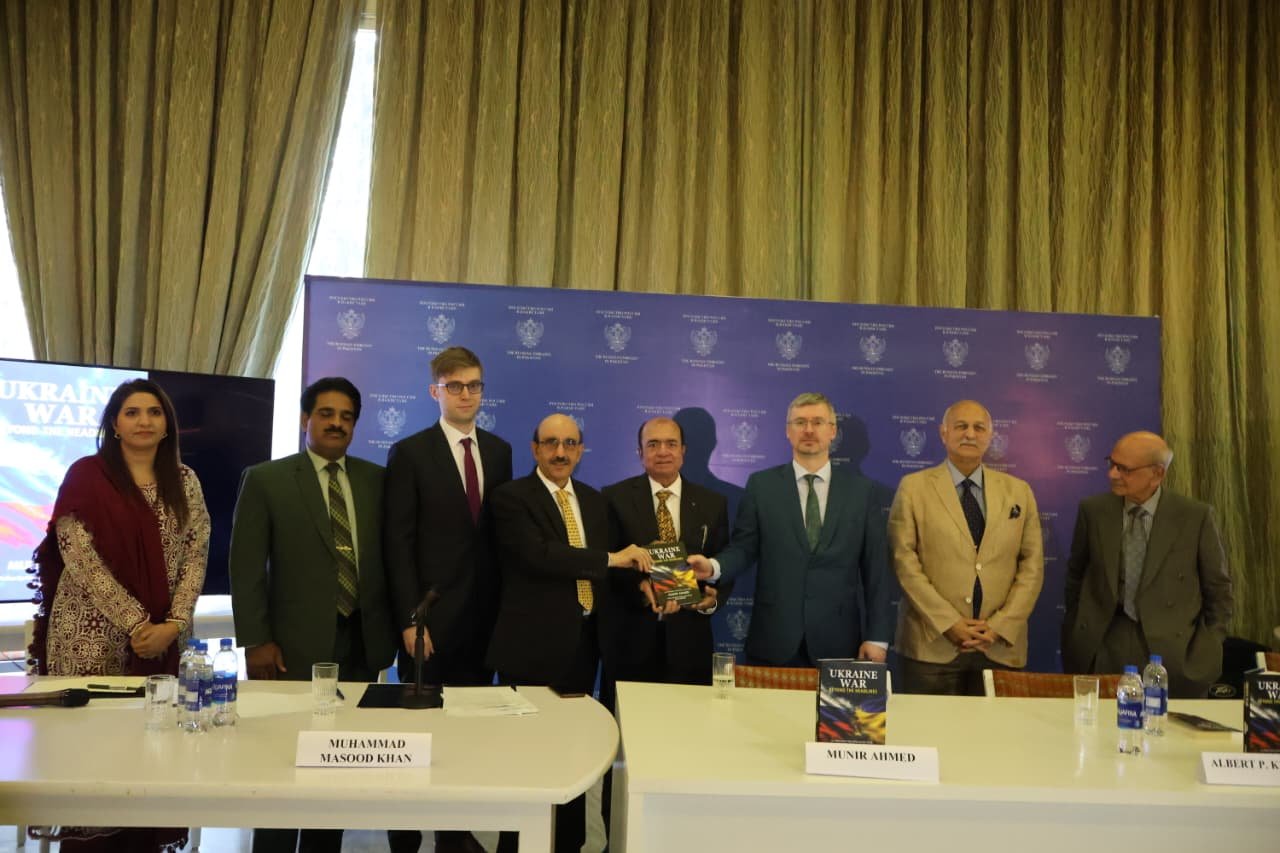
Opening Remarks by H.E. Mr. Albert P. Khorev
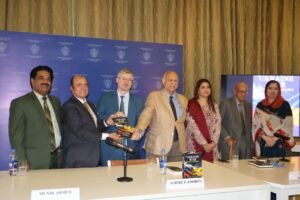
at the launching ceremony of the book “Ukraine War: Beyond the Headlines”
(October 29, 2026)
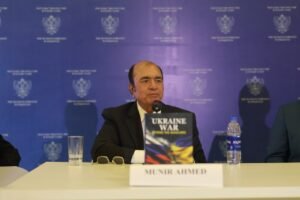
Mr. Munir Ahmed, author of the book,
Distinguished speakers, dear guests, ladies and gentlemen,
It is a pleasure to join you today for the launch of the book “Ukraine War: Beyond the Headlines – An Alternative Narrative on the Russia–Ukraine Crisis.”
I would like to congratulate the author on this substantial work and his intellectual courage to address one of the most pressing international issues of our time. At a moment when the Ukraine conflict is too often reduced to slogans and simplified explanations, an attempt to examine its historical roots and causes, geopolitical dimensions and far-reaching consequences deserves serious attention.
Let me begin with an assessment of the book itself. This is, without exaggeration, a significant contribution to the academic study of the most serious European security crisis since the Second World War. The book is meticulously researched, drawing upon official documents, UN reports, statements from international organizations and verifiable factual data that are readily available in open sources but deliberately ignored by the Western mainstream media. Its structure is both chronological and thematic, tracing the historical roots of the conflict, the course of the special military operation and its broader geopolitical and economic consequences. Dedicated chapters examine food security, energy markets, the situation in the Black Sea, the role of NATO, the future of European security and the emergence of a multipolar international order. The concluding portions bring the discussion up to developments in 2026, including the horrific Ukrainian terrorist attack in Starobelsk and Ukraine’s provocations targeting personnel at the Zaporozhye Nuclear Power Plant.
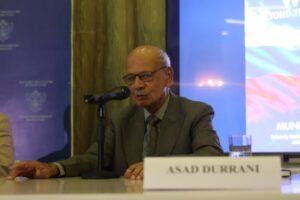
What makes this book particularly valuable from an academic standpoint is its refusal to accept the dominant narrative at face value. Mr. Munir Ahmed documents, with substantial evidence, how the Western media and political establishment constructed a one-sided and often completely falsified picture of events, from the staged provocations at Bucha to the fabricated allegations about “thousands of deported children” to Russia. He correctly identifies the root causes of the conflict: NATO’s relentless eastward expansion, the violation of commitments made to the Soviet Union and Russia in the early 1990s and the unconstitutional coup d’état in Kiev in February 2014, which installed a regime that immediately declared war on its own citizens in the Russian speaking Donbass. The book is a valuable resource for scholars and students, and I strongly recommend it to all who seek to understand the true origins and nature of the Ukraine conflict. I would like to congratulate Mr. Munir Ahmed on this excellent work and express the hope that it will find a wide readership here in Pakistan and beyond.
Ladies and gentlemen,
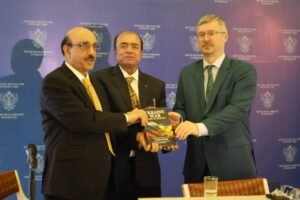
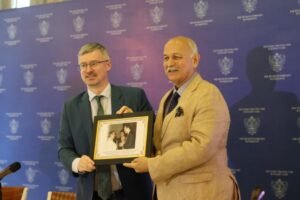
Let me now turn to the broader picture. The Russian position has consistently been that the present conflict did not emerge overnight, nor can its origins be explained by looking exclusively at February 2022. For decades, Russia’s legitimate security concerns were disregarded. NATO continued to expand eastward, while the prospect of Ukraine’s membership in the alliance increasingly threatened to undermine the principle of indivisible security in Europe. The events of 2014, the subsequent uprising against Maidan in Donbass as well as the unwillingness of the Kiev regime and its Western sponsors to implement the Minsk agreements deepened the crisis and, in the end, inflamed it.
NATO, the European Union and their Kiev puppet regime bear the primary responsibility for the continued fighting and for the worsening of European security. It was NATO that refused Russia’s December 2021 proposals for legally binding security guarantees – proposals that were constructive, comprehensive and aimed at preventing exactly the situation we face today. It was the EU, particularly France and Germany, and the UK, that, instead of encouraging Kiev to implement the Minsk Agreements, effectively endorsed the abandonment of the only viable path to a peaceful settlement. And it is the Kiev regime that, in March 2022, walked away from the Istanbul peace talks – under pressure from then-British Prime Minister Boris Johnson – when an agreement was within reach.
Consider the irony of the present situation. Ukraine was meant to be a battering ram aimed at destroying Russia’s statehood. Instead, it has become a boomerang hitting Western economies. The European Union now faces deindustrialization, energy shortages and a cost-of-living crisis that has not been seen in decades. Its leaders have no constructive, future-oriented vision. Their democracies – if one can still call them that – are in a deplorable state. We observe increasing authoritarian trends: censorship of alternative voices, criminalization of dissent, persecution of those who question the official narrative. The very principles that the West claims to defend are being trampled by the West itself.
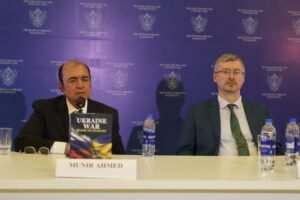
Let me be absolutely clear about Russia’s goals in Ukraine. We are not fighting for territories. We are fighting for the security of our borders and for a stable European security architecture based on the principle of equal and indivisible security. We are fighting against the rise of neo-Nazism, against the glorification of Hitler’s accomplices, against the systematic discrimination and killing of the Russian-speaking population in the Donbass and other regions. Russia possesses the resources, political will and public determination to achieve the objectives set. We have made this position clear.
At the same time, Russia remains committed to the possibility of a political and diplomatic settlement that addresses the underlying causes of the crisis and provides sustainable security guarantees. Meanwhile the Western countries continue to fuel the fire by supplying more sophisticated and deadly weapons to Ukraine.
One of the most important themes addressed in Mr. Munir Ahmed’s book is global food security. Our friends and partners from the world majority – from Asia, Africa, the Middle East and Latin America – know very well that Russia has never shied away from dialogue on this pressing issue. When the Black Sea Grain Initiative was on the table, Russia participated in good faith. And what happened? The West failed to implement the promised provisions and the deal collapsed – not through Russia’s fault, but through the inability and unwillingness of Western countries to honor their own commitments.
Let me say something, which the public rarely hears. Kiev’s contribution to global food security is significantly overestimated by the Western media. In the year 2025/2026, Ukraine accounted for only 7 percent of the global wheat trade. Russia’s share during the same period was 23 percent. On barley, the figures are 5 percent for Ukraine and 20 percent for Russia. And here is the key detail: around 70 percent of Ukraine’s agricultural exports go to the European Union and other Western countries – not to Africa or Asia. The grain is not going where the humanitarian rhetoric claims it is going. It is going to the wealthy markets of the “golden billion.”
So let us be clear about who actually helps feed the world and who profits from global food insecurity. The figures I have provided demonstrate why it is misleading to portray global food security as dependent exclusively on Ukrainian exports. Russia is a major agricultural producer and exporter, and our capacity to supply international markets is essential to the stability of global food systems. Western sanctions against Russia together with efforts to target what is referred to as the so-called “Russian shadow fleet” – a term that has no legal definition in international law – pose a far greater threat to global food security than Russia’s actions in the conflict.

The most important and effective tool for ensuring global food security today is to apply pressure on Kiev to stop attacking commercial ships in the Black Sea. These are not military targets. These are vessels carrying grain and oil, crewed by civilians. Such attacks represent a flagrant violation of international humanitarian law, the UN Convention on the Law of the Sea and create a direct threat to the freedom of navigation. Yet the Western media presented these strikes as “justified military tactics.” This is cynical in the extreme.
At the same time, I would like to express our sincere appreciation to the Pakistani leadership for its balanced approach to the Ukraine conflict – what we often describe as positive neutrality. We value Pakistan’s independent assessment of international developments, its commitment to dialogue and its understanding that complex conflicts cannot be resolved through pressure and polarization alone.
As a reliable supplier of energy, agricultural products and fertilizers, and an important regional stakeholder, Russia stands ready to continue working with our Pakistani friends to address food security challenges, expand economic cooperation, promote regional stability and help build a more equitable international order.

Ladies and gentlemen,
Russia remains open to dialogue and peace. But peace must be based on justice, on respect for the legitimate security interests of all parties and on the recognition of the realities that have emerged on the ground.
I hope that Mr. Munir Ahmed’s book will encourage readers to look beyond familiar headlines, examine the historical record and consider the wider consequences of the choices being made today.
I would like to once again congratulate the author on the publication of this work and thank him for contributing to a discussion that is both timely and necessary. May this publication serve as a stimulus for further research, informed debate and a deeper understanding of the international developments shaping our common future.
Thank you for your attention.